
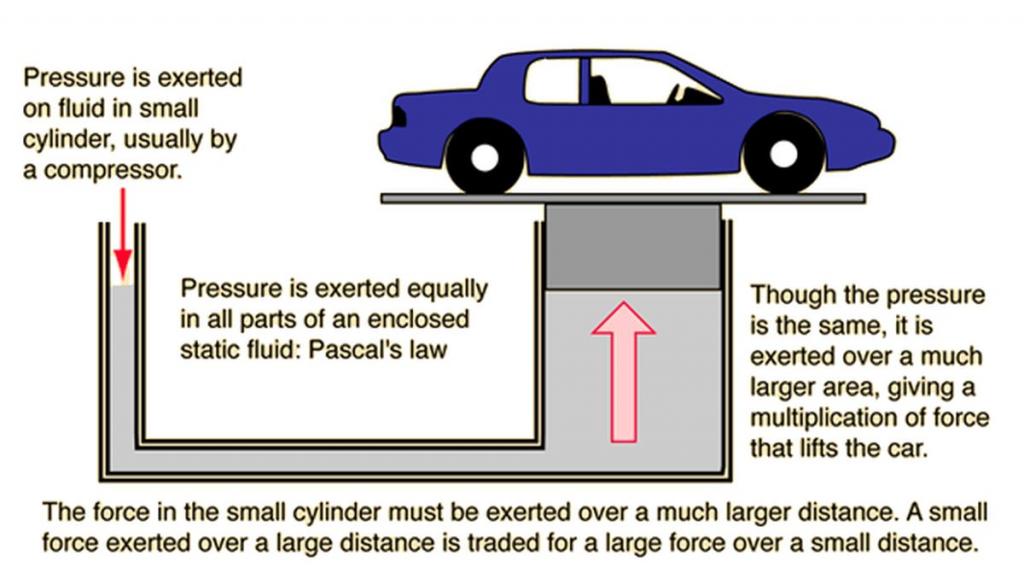
Simply put, hydraulic tools are devices that use pressurized fluid—typically hydraulic oil—as a source of power to perform various tasks. These range from simple operations like lifting heavy objects (using cylinders and jacks) to more complex applications such as tightening bolts (using torque wrenches).
Understanding Hydraulic Force and Power Through an Analogy
Imagine a syringe filled with water. When you push the plunger, you apply mechanical force, causing the water to squirt out rapidly due to its incompressibility. The fluid must move somewhere when pressure is applied, resulting in high pressure and speed at the tip.
Now picture the reverse: if we inject water at high pressure into the tip of the syringe, it would push the plunger outward, generating mechanical force. This is the basic principle of hydraulic force, and it's essentially how hydraulic cylinders operate. By leveraging this simple concept, we can harness pressurized fluid as a source of mechanical power—known as hydraulic power.
How Tools Harness This Powerful Energy Source
To utilize hydraulic power, a pump is required to inject fluid into the system. All hydraulic tools function on this principle. Most tools we supply operate using a 700-bar hydraulic pump, which delivers hydraulic oil through a hose rated for 700 bar with a safety factor of 4:1 (up to 2800 bar). The hose connects to the tool, providing the necessary power to perform its designated function.
Examples of such tools include 50-tonne lifting cylinders, 12,000 Nm torque wrenches, 10 cm wire rope cutters, and 630 mm2 cable crimpers, among many others.
What Are the Benefits of Hydraulic Power?
So why choose hydraulic power over more common sources like electricity or compressed air? Here are several advantages:
- Hydraulic systems can deliver significantly more power in a smaller footprint compared to electric motors when high force is needed.
- Hydraulic energy is easier to control and monitor, offering greater accuracy and precision.
- Unlike battery-powered systems, hydraulic setups provide consistent, reliable, and repeatable performance without the risk of power depletion.
These benefits are why hydraulic power is commonly used in automotive braking systems, where precision and reliability are critical.
Why Isn’t Hydraulic Power Used for Everything?
While powerful and efficient, hydraulic systems aren't suited for every application. For instance, hydraulic power can't make a light bulb glow—that job requires electricity. Nonetheless, hydraulic systems excel in many industrial and mechanical settings, and Hi-Force has developed a wide range of tools to leverage these advantages.
At Royal Technic, we specialize in hydraulic systems and tools. Our expertise ensures you get the right solution for your needs. We're here to help—contact us anytime for assistance.


